

A good masala chaas recipe is uncomplicated: whisk plain dahi until smooth, dilute it with safe drinking water to your preferred consistency, then add roasted cumin, a little salt, fresh coriander and other spices to taste. Serve it chilled and drink it promptly. The result is a tangy, savoury beverage that can accompany dal-rice, roti-sabzi or a simple summer lunch. For a basic two-glass preparation, start with one cup of plain dahi and approximately one to one-and-a-half cups of chilled water, adjusting until the drink pours easily. Traditional recipes vary widely by region and household, so there is no single compulsory spice formula. What matters most is the quality of the curd, the cleanliness of the preparation tools and the balance between tanginess, salt and aroma. This guide covers the classic method, regional variations, common mistakes, food safety and serving ideas.
What is chaas, and how is it different from a lassi?
Chaas is a light, often savoury drink associated with Indian meals. In many kitchens, it is made by thinning curd with water and seasoning it. Traditional buttermilk can also refer to the liquid remaining after butter is churned from cultured dairy. These related preparations do not always have identical ingredients or fat levels. When making chaas at home from dahi, it is clearer to describe the method rather than promise that the drink has the precise composition of traditionally churned buttermilk.
Lassi is frequently thicker and can be sweet or savoury, while many chaas recipes are comparatively thin, spiced and served with meals. Regional names and preferences differ. The FSSAI standards for fermented milk products distinguish fermented dairy categories and drinks made from them; home recipes are not a substitute for commercial product labelling. For household cooks, the practical distinction is simple: use a good curd base, decide how thick you want the beverage and add flavourings deliberately.
Ingredients for two refreshing glasses
You do not need a complicated spice mix. Start with the following everyday ingredients and adjust according to taste, dietary needs and how sour your dahi is. Use a clean measuring cup if you want consistent results, particularly when preparing the drink for guests.
| Ingredient | Starting quantity | Purpose |
| Plain dahi | 1 cup | Tangy dairy base |
| Safe, chilled drinking water | 1 to 1½ cups | Dilution and consistency |
| Roasted cumin powder | ¼ teaspoon | Warm, earthy aroma |
| Fresh coriander | 1 tablespoon, finely chopped | Freshness |
| Fresh mint | A few leaves, optional | Cooling flavour impression |
| Ginger | Small grated pinch, optional | Sharpness |
| Salt | A small pinch, to taste | Savoury balance |
| Black pepper or green chilli | Optional, very small amount | Gentle heat |
A pinch of black salt can add a different flavour, but it also contributes sodium; do not treat it as sodium-free or medically beneficial. For young children or anyone sensitive to spicy foods, omit chilli and use mild seasoning. A preparation intended for someone with a specific dietary restriction should be adapted to their needs.
Step-by-step: the classic masala chaas method
First, take chilled plain dahi that has been stored correctly. Whisk the dahi thoroughly with a spoon, balloon whisk or hand blender until no large lumps remain. This step matters because adding water to lumpy dahi tends to produce a drink that separates unevenly and feels grainy. You need a smooth base before adjusting thickness.
Second, add cold, safe drinking water gradually. Mix after each addition rather than pouring it all in at once. A thick curd may need more water than a softer one, and preferences range from creamy to very light. Stop when the drink has the consistency you like. Third, stir in cumin, salt and freshly prepared herbs. Taste with a clean spoon and adjust one flavour at a time. Finally, pour into clean glasses and serve chilled. Avoid leaving the prepared dairy drink sitting at room temperature while the rest of lunch is prepared.
How to roast cumin for better aroma
Roasted cumin contributes a distinctive, nutty aroma that separates a good homemade chaas from plain diluted curd. Place a small amount of whole cumin in a clean, dry pan over low heat. Stir or shake regularly until the seeds smell aromatic, then remove them before they burn. Allow them to cool and crush in a clean spice grinder or mortar. A tiny amount is enough for a couple of glasses.
Grinding a large quantity at once can be convenient, but ground spice loses aroma with prolonged exposure to air and humidity. Store extra roasted cumin in a clean, dry, tightly closed container away from heat. Do not roast with excessive oil or allow the powder to become bitter. Freshly prepared cumin should enhance the tang of the dahi rather than overwhelm it. If you already have a clean, well-stored ready-made roasted cumin powder, it is entirely suitable for a quick weekday preparation.
Five flavour variations for Indian meals
Classic jeera chaas: Keep the drink simple with roasted cumin, salt and coriander. This works well with everyday dal and vegetable dishes because the flavour does not compete with the meal. Mint chaas: Blend several clean mint leaves with a little water, then stir the paste into the dahi mixture. Strain if you prefer a smoother drink.
Ginger chaas: Add a small amount of finely grated ginger for a sharper finish; use less than you think you need and increase gradually. Coriander-chilli chaas: Blend fresh coriander with a small amount of green chilli for adults who enjoy a little heat. Spiced black-pepper chaas: Omit chilli and use a few grinds of black pepper with cumin. If you are cooking for a mixed-age household, prepare the mild base first and season individual glasses separately. That approach gives everyone a choice without making several different recipes from scratch.
How to avoid watery or overly sour chaas
The most common reason chaas tastes watery is adding too much water before the dahi has been whisked. Begin with less and dilute gradually. If you have already made the drink too thin, whisk a little additional cold dahi in a separate bowl and incorporate it gently. Do not compensate by adding excessive salt, chilli or sugar, because these may hide the problem without creating the desired texture.
Curd’s sourness varies by fermentation, storage time and temperature. Choose dahi with a flavour that is pleasant before mixing. If it tastes unusually sour or shows signs of spoilage, do not use it. A drink made with spoiled curd is not fixed by spices or ice. Rather than trying to make every batch taste identical, adjust the seasoning lightly to accommodate ordinary differences in curd character. That is part of the charm of homemade chaas.
Food safety: cold ingredients, safe water, clean tools
Masala chaas often requires no cooking after mixing, so cleanliness matters. Wash hands, clean the blender or whisk, rinse herbs with safe water and use clean glasses. Never dilute the curd with questionable water. The World Health Organization’s five keys to safer food emphasize safe water, cleaning and keeping perishable food at suitable temperatures. These principles apply even when a drink is entirely vegetarian and contains traditional ingredients.
The FDA’s refrigeration guidance recommends keeping refrigerated foods at 4°C or below and minimizing time spent in warm conditions. Prepare only what you expect to drink soon; refrigerate any remainder promptly in a clean covered container and follow sensible short-use practices. Do not assume the acidity of dahi makes a prepared drink safe to leave out all afternoon. If serving outdoors during hot weather, keep the drink appropriately chilled and replenish in small batches.
Is masala chaas a probiotic drink?
Dahi is a fermented dairy food, but the word probiotic has a specific meaning in scientific and regulatory contexts. Not every homemade curd or chaas automatically contains documented probiotic strains at a clinically supported amount. Some live cultures may remain in a preparation, depending on the starting product and processing, but it is misleading to promise that a glass cures indigestion, builds immunity or treats a medical condition.
Chaas also contains dairy components and may contain lactose. People with lactose intolerance respond differently, while those with cow’s milk protein allergy should avoid ordinary dairy-based chaas unless advised otherwise by a qualified clinician. The drink can be an enjoyable part of a varied diet; it does not need exaggerated medical claims to be worth preparing. For a broader dietary perspective, the ICMR-NIN dietary guidelines emphasize balance across food groups rather than relying on a single food or beverage.
A lighter version without excessive salt
Many packaged savoury drinks can taste very salty, and homemade chaas gives you control over seasoning. Begin with cumin and herbs, then decide whether you actually need added salt. A squeeze of lemon is not required and may make already sour curd taste harsh. A small amount of ginger or mint can add flavour without relying on salt. If someone has been advised to limit sodium, take that advice seriously and check any premixed spice blend for hidden salt.
The purpose of a lighter recipe is taste and preference, not a promise that chaas itself treats blood pressure, dehydration or digestive disease. Drinking fluids is important in hot weather, but needs vary by person and activity. Chaas may accompany meals, while safe plain water remains a simple everyday choice. It is useful to distinguish culinary enjoyment from medical treatment, especially when writing about traditional foods online.
Masala chaas with lunch: pairing suggestions
Jeera chaas pairs naturally with dal-chawal, vegetable pulao, khichdi, stuffed parathas and simple roti-sabzi. Its tanginess complements rich flavours, while cumin and coriander add aroma. For a light lunch, serve a small glass with cooked vegetables, whole grains and protein-rich food rather than treating the drink as a complete meal. If the main dish is already heavily spiced, keep the chaas mild.
For a gathering, make a plain batch and provide optional cumin powder, mint or black pepper on the side. Serve in clean glasses and replenish from refrigerated containers. Avoid keeping an oversized decorative dispenser in direct sunlight for hours. If guests prefer thicker drinks, reserve some undiluted dahi and mix small portions to order. These small serving decisions improve flavour and food handling without complicating the recipe.
Choosing dahi for homemade chaas in Dehradun
A good recipe begins with dahi that you actually enjoy eating plain. Look for an even consistency, pleasant acidity and proper storage. You can use suitably prepared homemade dahi or a safely handled purchased product. For eligible households, Amrada Cow’s Milk Dahi is part of the brand’s fresh dairy range. It is available only to existing Amrada milk customers in serviceable Dehradun areas, subject to current availability.
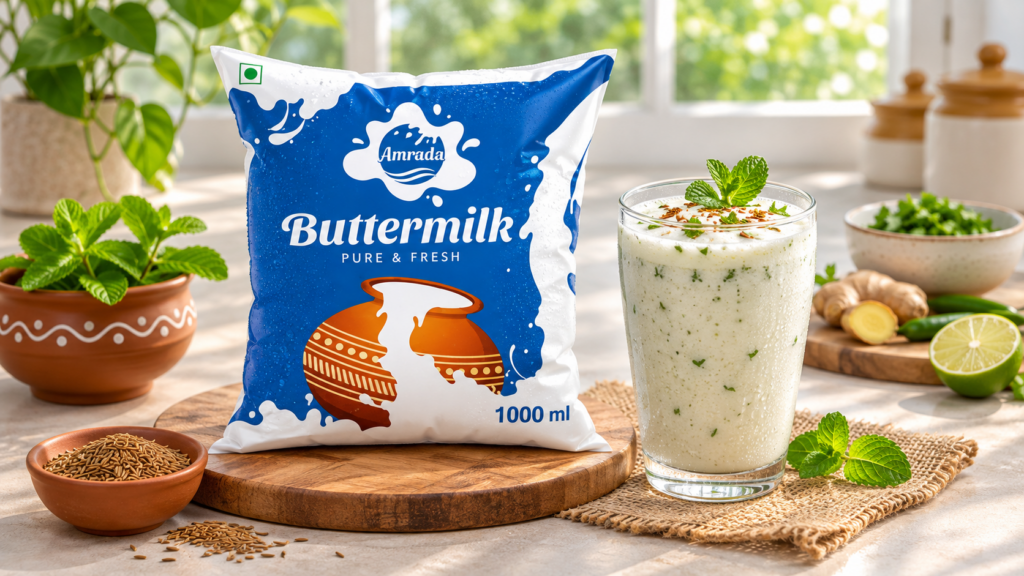
Amrada also lists a ready-to-order Buttermilk product for eligible local customers. A purchased drink and a homemade chaas recipe may have different formulations, so check the product description rather than assuming they are identical. If you prefer to set dahi at home, read the handling instructions for Amrada Premium Milk or Amrada A2 Milk before use. Fresh milk delivery is confined to serviceable Dehradun locations.
Easy planning for a family weekend
Suppose you are preparing lunch for four people. Start by asking whether everyone wants a full glass, a small tasting portion or no dairy drink. Scale the recipe accordingly. Whisk the dahi shortly before the meal, keep the herbs ready in a clean covered container and mix the spices at serving time. This offers a fresher taste and avoids needless time at room temperature.
For children, keep the drink mild and ensure the ingredients are suitable for their age and dietary needs. For older adults, pay attention to any medical guidance about fluid or salt intake. If a guest avoids dairy, offer a separate suitable drink instead of suggesting that A2 milk or diluted dahi will automatically solve intolerance or allergy. The most hospitable recipe is one that gives people a choice, uses safe ingredients and tastes good without extravagant claims.
Frequently asked questions
What is the ideal curd-to-water ratio for chaas?
A practical starting point is one cup of dahi to about one to one-and-a-half cups of water. Adjust the ratio based on the curd’s thickness and the drink you prefer.
Can I make chaas without a blender?
Yes. A whisk, spoon or traditional hand churner works well. Smooth the dahi before gradually adding water for the best texture.
Can I use sweetened yogurt?
Plain unsweetened curd is better suited to savoury masala chaas. Sweetened products may clash with cumin, salt and coriander.
Is chaas the same as traditional buttermilk?
Not always. Chaas commonly refers to a diluted cultured-dairy drink, while traditional buttermilk may be the liquid remaining after churning butter.
Can I make chaas in advance?
You can prepare a small batch and refrigerate it promptly, but freshly mixed chaas generally offers better herb aroma and texture. Do not leave it warm.
Does adding cumin make spoiled curd safe?
No. Spices improve flavour, not the safety of a spoiled dairy ingredient. Discard dahi that has been mishandled or shows signs of spoilage.
Does Amrada deliver dahi and buttermilk throughout India?
No. These fresh products are restricted to eligible existing milk customers in serviceable Dehradun areas. Amrada’s ghee products have a separate India-wide ordering arrangement.
Conclusion
A satisfying glass of masala chaas needs smooth dahi, safe chilled water, modest seasoning and clean handling. Start with cumin, salt and coriander, then try mint or ginger according to preference. The drink pairs naturally with many Indian meals and is easy to scale for a family. Dehradun households already using the brand’s milk service can explore Amrada’s fresh buttermilk listing or check local delivery availability. Whether purchased or homemade, keep dairy drinks appropriately chilled and enjoy them for their flavour rather than unverified health promises.