

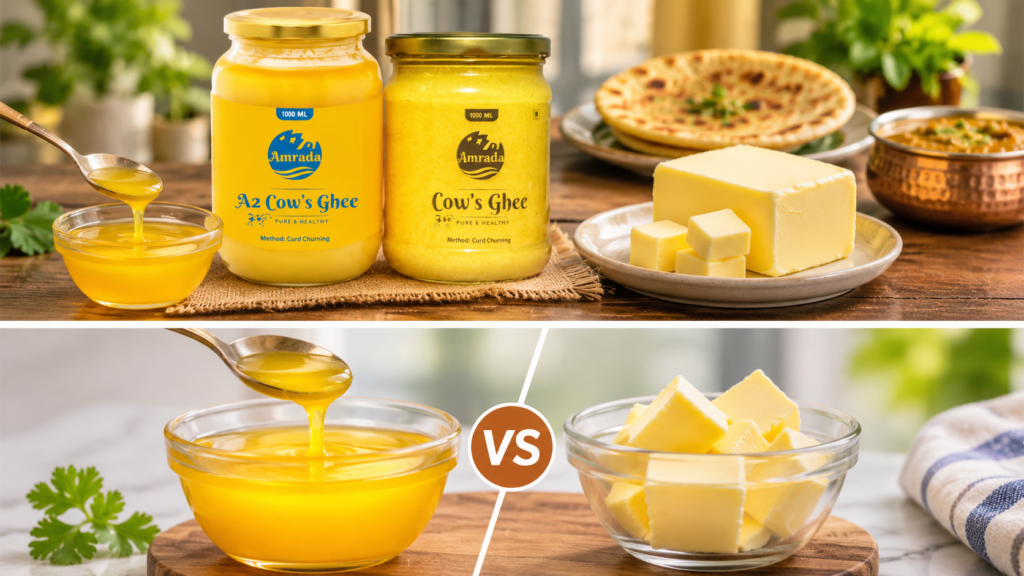
The difference in ghee vs butter begins with composition and cooking behaviour. Butter contains water and milk solids alongside milk fat, while ghee is clarified to remove most of the water and non-fat solids. That difference affects flavour, storage instructions, browning and suitability for particular cooking techniques. Ghee is often convenient for an aromatic finishing tadka or brushing onto a hot roti. Butter can add a creamy dairy flavour to pav, toast and some baking recipes, and its milk solids can brown when heated. Neither ingredient is automatically healthier than the other, and both contribute saturated fat. Choosing between them is mainly about the recipe, the heat involved, your preferred taste, the product’s label and your overall dietary pattern. This detailed guide explores how Indian home cooks can use each thoughtfully without treating traditional food preferences as medical facts.
What exactly is the difference between ghee and butter?
Butter is generally produced by churning cream or cultured cream to concentrate the milk fat. It retains some water and non-fat milk components. Ghee is made by heating butter or another appropriate dairy-fat starting material so that most water and non-fat milk solids are removed, while characteristic flavour develops. Individual manufacturing methods can vary, especially where cultured butter or different milk sources are involved.
The FSSAI standard for milk fat products describes ghee as a milk-derived fat product with most water and non-fat solids removed. This regulatory distinction helps explain why a recipe calling for butter is not always identical to one using ghee. However, neither definition automatically verifies a brand’s specific claims about cow breed, traditional churning, laboratory testing or superior health outcomes. Those require product-specific evidence.
How the two ingredients behave in a hot pan?
When butter is heated, its water begins to evaporate and its milk solids can brown. That browning may create an appealing toasted flavour for some preparations, but excessive heat can also cause darkening and burning. Ghee has comparatively fewer non-fat milk solids, so it can often be used at higher cooking temperatures before similar milk-solid browning occurs. Actual smoke points vary by formulation, impurities and previous handling, so one fixed temperature should not be presented as a guarantee for every brand or batch.
The sensible rule for either fat is not to heat it until it smokes heavily. The American Heart Association’s cooking-oil guidance notes that oils begin to degrade at their smoke point. If a pan is producing smoke, reduce the heat and reconsider the technique. Ghee’s practical heat tolerance does not make extreme frying a healthy cooking method or remove the need for appropriate food-safety practices.
Ghee for tadka, dal and khichdi
A small finishing tadka can carry the aroma of cumin, mustard seeds, garlic or other spices through an entire dish. Ghee is a familiar choice in many Indian homes because its flavour works well with hot spices and cooked lentils. Warm a modest measured amount in a suitable pan, add spices according to the recipe and remove from heat before ingredients burn. Then pour the prepared tadka over the food carefully, keeping hands and children clear of hot splashes.
For khichdi, a measured spoonful of ghee at the end may provide enough aroma without requiring more throughout cooking. This is useful when family members want different richness levels: cook the base dish in a suitable way and let people add a little at the table. If you are planning to buy cow ghee online, consider the flavour you enjoy and how frequently you prepare these dishes. More ghee is not automatically better; ingredient balance is what makes a good recipe.
Butter for toast, pav and creamy finishes
Butter shines when a recipe benefits from its creamy texture, water content and recognizable dairy taste. Toasted bread, pav, certain sauces and some baked goods can be particularly dependent on butter’s character. In a pan with moderate heat, butter can produce appealing browning notes, but cook carefully rather than letting it burn. Salted and unsalted butter are not interchangeable in every recipe because added salt affects the final seasoning.
For pav bhaji, a small amount of butter can be mixed in just before serving to create the familiar restaurant-style mouthfeel. For garlic bread, butter may carry garlic and herbs through the bread as it warms. Ghee can provide a different, richer aroma in these recipes, but the outcome will not be identical. It is more useful to think of ingredient substitution as a deliberate choice than as a universal upgrade.
Which is better for rotis and parathas?
Both are used, and the better answer depends on preference and cooking method. A little ghee on a hot roti creates a traditional aroma and coats the surface. Butter gives a different creamy finish and can be pleasant on a fresh phulka. For parathas, some families use ghee during cooking while others prefer an unsaturated cooking oil or a smaller amount of fat. Whichever you choose, measure additions rather than assuming that every layer must be heavily greased.
It is also possible to cook a soft roti without adding fat to the dough or pan and use a small amount only at serving. That can make it easier for different family members to adjust their portions. If a recipe calls for butter but the cook chooses ghee, expect a possible change in flavour and water balance. This matters more in measured baking recipes than in simple roti finishing.
Is ghee healthier than butter?
There is no sound basis for treating either as a cure-all. Both supply substantial fat and saturated fatty acids, although their exact composition and water content differ. Ghee has less water and non-fat milk solids, so tablespoon-for-tablespoon comparisons may involve slightly different fat quantities. The relevant nutritional question is how much you use and what the rest of your diet looks like, not whether one ingredient has a more traditional reputation.
The World Health Organization’s 2023 guidance on saturated fats emphasizes limiting saturated-fat intake and making appropriate substitutions with unsaturated fats. The ICMR-NIN dietary guidelines for Indians likewise place fats within a balanced overall pattern. You can enjoy ghee or butter in moderate culinary amounts while choosing suitable unsaturated oils for many other cooking tasks. Personal medical needs may warrant advice from a qualified professional.
Does removing milk solids make ghee safe for dairy allergy?
No blanket claim should be made. Clarification removes most non-fat milk components, but processing methods and residual proteins may vary. People with cow’s milk protein allergy should not assume ordinary ghee is safe without appropriate professional guidance. Similarly, a product being labelled A2 does not make it suitable for people with milk-protein allergy. The A2 designation relates to a milk protein variant, not to an absence of all allergenic milk proteins.
Lactose intolerance and milk-protein allergy are different conditions. Ghee generally contains very little lactose compared with milk because of its composition, but consumers with strict dietary requirements should check the actual product label and seek individualized advice. Never substitute marketing claims such as gentle on the stomach or natural purity for relevant medical information.
What about saturated fat and portion size?
A small quantity used for flavour can be different from using generous amounts for every step of a meal. When a dish already contains nuts, dairy, fried ingredients or another cooking fat, extra butter or ghee adds to the overall fat content. One practical approach is to measure the fat needed for cooking and decide separately whether a finishing spoonful is necessary. A good cook can create aroma with spices, herbs and careful heat management rather than relying only on additional fat.
For everyday dietary balance, compare the range of fats your family eats across breakfast, lunch, snacks and dinner. The WHO’s advice supports using primarily unsaturated fats in the diet, while recognizing that many cuisines use small amounts of other fats for flavour. Choosing vegetable oils appropriately for some cooking tasks does not prevent you from enjoying traditional ghee-based preparations occasionally. Context matters more than simplistic claims that one ingredient is completely good or bad.
Comparing taste and aroma in common Indian dishes
A home cook preparing dal may notice that ghee contributes a rounded, nutty aroma to cumin and garlic. A cook preparing toasted pav might prefer butter’s soft dairy flavour. In a sweet dish such as halwa, ghee’s characteristic aroma is part of many traditional recipes, while butter can produce a different finish. In mashed vegetables, either could work, but the balance of water and fat may affect texture.
Taste preference is subjective, so compare small quantities before replacing an ingredient in a family recipe. For example, make two small portions of cooked vegetables and finish one with a modest amount of ghee, the other with butter. Compare aroma, mouthfeel and how the ingredients complement the spices. This is a meaningful culinary test, unlike judging purity or health effects from colour alone.
Does ghee always have a higher smoke point?
Ghee generally tolerates higher heat than ordinary butter because most of the milk solids that brown early have been removed. That is a practical difference, not a license to overheat it. Actual smoke points depend on manufacturing, composition and how the fat has been stored. Do not choose frying temperatures solely from an online chart without considering the recipe, equipment and safety.
When cooking spices, moderate controlled heat is often preferable because garlic, chilli and cumin can burn even if the cooking fat itself remains stable. For longer cooking, choose a suitable technique and oil or fat based on the food and dietary context. If a pan smokes unexpectedly, turn down the heat and ventilate the space. Repeatedly using heavily overheated cooking fat is not a sensible way to economize.
Storage rules for butter and ghee are not identical
Butter generally requires refrigeration according to its packaging because it contains moisture and non-fat milk components. Ghee may have different storage directions depending on how it was produced and packaged, including cool, dry cupboard storage for some shelf-stable products. Read the actual label rather than assuming that all ghee can stay on an open shelf indefinitely. Keep either product clean and protected from contamination.
With ghee, use a clean dry spoon and close the lid promptly. With butter, prevent contact between the butter block and shared bread crumbs or unwashed knives. Both products can develop undesirable flavours when stored badly. Heat, air, time and contamination matter, even if their effects are different. Choosing a pack that matches your family’s usage rate is often easier than handling a large quantity for months.
How to compare Amrada’s ghee options
Amrada offers A2 Cow Ghee 500 ml, A2 Cow Ghee 1000 ml, Premium Cow Ghee 500 ml and Premium Cow Ghee 1000 ml. These are separate listings with pack-specific descriptions, so compare their current details and prices individually. The brand’s ghee products are available for online ordering across India subject to delivery serviceability.
The A2 designation concerns the milk source and protein variant; do not automatically infer a clinical advantage in a clarified-fat product. Likewise, do not assume that every SKU uses an identical traditional method unless its individual production description supports that claim. Amrada’s local fresh milk and paneer offerings have different geographic restrictions from the ghee range. The brand’s About page provides sourcing and business context, but buyers should still check each product’s current label and handling directions.
Three simple recipe scenarios
A quick dal dinner: Cook dal thoroughly using your preferred recipe. Heat a small measured quantity of ghee, briefly bloom cumin and garlic without burning them, and add the tadka just before serving. Choose ghee for its flavour, not because it makes the dal medically therapeutic. A weekend pav breakfast: Toast pav on moderate heat with a little butter for its familiar flavour; avoid heavy browning or excessive additions.
A family vegetable lunch: Sauté vegetables in a suitable amount of an appropriate cooking oil, then offer a small optional ghee finish to those who enjoy the aroma. This separates the functional cooking fat from the seasoning fat. For a family with different preferences, that flexibility can be more useful than cooking everything in the same large quantity of butter or ghee. Each scenario illustrates the principle: let the dish and portion size guide the choice.
Quick comparison table
| Factor | Butter | Ghee |
| Composition | Milk fat plus water and milk solids | Predominantly milk fat, much less water and solids |
| Typical taste | Creamy dairy flavour | Concentrated, sometimes nutty dairy aroma |
| Browning | Milk solids can brown earlier | Fewer milk solids to brown |
| Uses | Toast, pav, sauces, some baking | Tadka, rotis, dal, sweets |
| Storage | Follow refrigerated label instructions | Follow product-specific storage directions |
| Nutrition | Contains saturated fat | Contains saturated fat |
| Allergy considerations | Contains milk proteins | Do not assume safe for milk-protein allergy |
Frequently asked questions
Is ghee the same as melted butter?
No. Melting butter changes its physical state, while making ghee involves heating and removing most of the water and non-fat milk components.
Can I use ghee instead of butter for pav?
Yes, but the flavour will change. Butter often provides the familiar creamy note, while ghee adds a more concentrated dairy aroma.
Which is better for a dal tadka?
Ghee is a common choice for aroma, although other suitable cooking fats can be used. Keep the quantity measured and avoid burning the spices.
Is ghee free of all milk allergens?
Do not assume so. People with cow’s milk protein allergy need individualized professional guidance rather than relying on clarification claims.
Is ghee healthier because it tolerates heat?
No. Heat behaviour and nutritional impact are separate questions. Both ghee and butter contribute saturated fat, and overall dietary balance matters.
Should butter and ghee both be refrigerated?
Follow each product’s packaging. Butter commonly needs refrigeration; some ghee products allow cool, dry storage, but conditions and instructions vary.
Can I order Amrada ghee in another Indian state?
Amrada lists cow ghee for India-wide online orders, subject to PIN-code delivery serviceability and current terms at checkout.
Conclusion: choose the fat that suits the dish
The ghee versus butter decision is primarily a practical cooking choice. Butter’s water and milk solids suit some creamy and browned preparations; ghee’s concentrated character suits many traditional Indian finishing techniques. Neither is a substitute for balanced nutrition or appropriate cooking temperatures. If you enjoy the flavour of ghee in tadka, rotis or sweets, explore Amrada’s A2 and Premium Cow Ghee collection. Compare pack sizes, current descriptions and delivery terms, then use the quantity that makes the recipe taste right.