

Knowing how to store paneer makes everyday Indian cooking easier, reduces unnecessary food waste and helps protect the people eating it. Paneer is a high-moisture dairy food, so it needs prompt refrigeration, clean handling and attention to the actual use-by instructions. A closed, food-grade container in a refrigerator kept at 4°C or below is a sensible starting point. Do not leave fresh paneer on the kitchen counter for hours, and do not assume a block is safe simply because it still looks white. Its flavour and texture also change with storage, particularly when the surface dries out. The following guide separates food-safety essentials from optional texture techniques and explains how to handle opened, cooked, frozen and leftover paneer. These recommendations are useful for households cooking paneer bhurji, matar paneer, sandwiches, wraps and celebratory dishes.
What makes paneer different from hard cheese?
Paneer is a fresh, usually unripened cheese made by coagulating heated milk and draining the curd. Unlike many aged cheeses, it is not intentionally dried for a long maturation period. It retains substantial moisture, and that is part of the pleasant, soft bite people expect. The same moisture means that safe handling matters from the moment you bring it home. There is no reliable universal shelf-life number for every form of paneer, because packaging, heat treatment, moisture, hygiene and temperature history vary.
The World Health Organization’s food-safety framework recommends cleanliness, safe temperatures, adequate cooking where appropriate and safe raw materials. Those principles apply directly to paneer. If you purchase fresh paneer from a local dairy, ask how it should be refrigerated and how soon it should be used after opening. Never substitute online rules of thumb for a date or handling instruction provided on the actual pack.
Start with the purchase and the journey home
Food safety is not something to think about only after the paneer reaches your refrigerator. If you buy from a shop, select a properly stored package and bring it home promptly, ideally in an insulated bag if the weather is hot or the journey is long. Choose a product with intact packaging and legible information. If a loose block is sold without protective packaging, ask how it has been chilled and handled before purchasing.
The FDA’s guidance on chilling perishable food advises refrigerating promptly and maintaining a refrigerator at 4°C or below. This principle is particularly important during Indian summers and while running errands between shopping and returning home. Paneer should not sit in a hot vehicle while you make several additional stops. The safest buying trip is one that minimizes unnecessary warm exposure.
Refrigerate paneer promptly and consistently
Once home, store the product in the coldest suitable area recommended by your refrigerator’s manual, without risking freezing unless you intend to freeze it. Interior shelves usually experience fewer door-opening temperature changes than door compartments. If your refrigerator is overcrowded, make space so cold air can circulate. Keeping paneer cold is more important than choosing a decorative storage box.
Do not leave an opened block on a plate next to your chopping board while other ingredients are prepared over a long period. Cut the quantity needed and return the remainder to the refrigerator. In a busy kitchen, one person might unwrap paneer while another cooks, making it easy to lose track of time. Agree on a simple rule: take it out when you need it, use clean utensils and put leftovers away quickly. The FDA’s general storage advice also recommends covered containers and checking refrigerated foods regularly.
Should paneer be stored in water?
Some home cooks keep paneer submerged in water because it may reduce drying and help maintain a soft feel. That is a texture technique, not an automatic safety guarantee. Water can introduce contamination if the vessel, liquid or utensils are unclean. It may also alter the product’s flavour or surface quality. If the manufacturer supplies paneer in a particular liquid or sealed format, follow that label rather than transferring it without a reason.
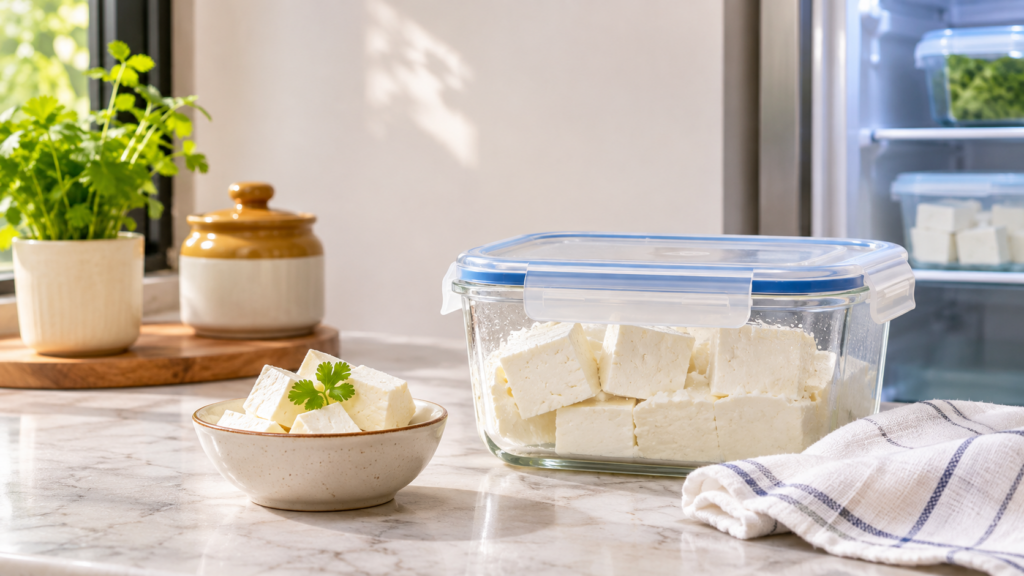
For a small, freshly opened block you plan to use soon, a clean airtight food-grade container can be more straightforward. If you choose to use water for texture, only use safe drinking water, a cleaned vessel and a continuously cold refrigerator, and replace the water using clean equipment as needed. Do not use the water method to extend a product beyond its stated use period. When in doubt, storage instructions on the product take priority over social-media kitchen hacks.
How to prevent paneer from turning dry or rubbery?
Paneer’s familiar softness comes partly from its retained moisture. Exposing a cut block to circulating refrigerator air can make its surface dry. Wrapping loosely in a way that allows leakage or contact with other foods can create other problems. A properly sealed, clean container helps limit moisture loss while protecting the block from nearby aromas. Keep raw vegetables, uncooked meat and leftovers in separate containers to prevent cross-contamination.
Texture is also affected by cooking. Prolonged dry frying can make many paneer pieces feel firm. For dishes such as matar paneer, adding the pieces near the end of cooking rather than boiling them aggressively for a long time may preserve a tender bite. For bhurji, crumble only the amount you need, and cook it promptly. Good storage protects the ingredient; thoughtful cooking protects the final dish. Do not claim that a particular trick can restore paneer that has spoiled.
Cutting, serving and storing an opened block
Wash hands and clean the knife and cutting board before handling paneer. If the same board was used for raw poultry, meat or unwashed produce, clean it thoroughly before preparing ready-to-eat dairy foods. Place the paneer on a clean surface, divide into practical portions and avoid touching the reserve block unnecessarily. Put the unused portion in a properly closed food-grade container and return it to cold storage.
Labeling an opened container with the opening date can be helpful in shared kitchens. However, the label does not create a new shelf-life promise; the original product’s use-by directions still matter. If several family members cook at different times, leave a note stating which portion is intended for which meal. This reduces the risk that leftover pieces sit uncovered in the refrigerator or are repeatedly warmed and chilled. Simple organization can be as valuable as any special storage accessory.
How long does fresh paneer last in the fridge?
There is no single safe number that applies to every fresh paneer product. A commercially sealed product may have a different validated use period from unpackaged fresh paneer. The answer also depends on whether the pack is unopened, how it was processed, whether it remained cold during delivery and how it was handled after opening. Follow the seller’s instructions and the date on the package. If no reliable information is available, use it promptly instead of relying on a casual claim that all paneer lasts a fixed number of days.
If the product has been kept warm for too long, refrigeration afterward does not reset the clock. For perishable foods, official consumer advice generally recommends refrigeration within two hours, or one hour in temperatures above 32°C. These are upper limits for common handling circumstances, not a recommendation to leave paneer outside until the limit is reached. For vulnerable family members, take extra care and use safely processed, well-handled dairy foods.
Freezing paneer: convenience with texture trade-offs
Paneer can sometimes be frozen for later cooking, especially if the product’s packaging permits it. Freezing slows spoilage but often affects texture; the thawed block may be more crumbly, porous or less creamy. That may be acceptable in cooked curries or crumbled fillings and less appealing in a dish that depends on a delicate, tender cube. Freeze in meal-sized portions in appropriate packaging so you do not thaw a large block every time.
Label portions with dates and thaw safely in the refrigerator. Never leave paneer out overnight to thaw on a counter. The food-safety guidance on chilling and freezing notes that freezing does not destroy all harmful germs. Therefore, freezing cannot rescue paneer that has already been mishandled or spoiled. If you buy fresh paneer because you appreciate its texture, ordering smaller portions more frequently may be preferable to long freezer storage.
What about leftover cooked paneer dishes?
A paneer curry, pulao, sandwich or tikka has a different storage situation from an unopened block. Once cooked, leftovers should be cooled and refrigerated promptly in shallow containers rather than remaining at room temperature through the afternoon. Keep cooked food covered and separate from raw ingredients. Date the container if several dishes are stored at once, and follow reliable leftover-storage guidance rather than assuming that heavy spices or reheating will preserve safety indefinitely.
When reheating, warm the portion thoroughly and evenly according to the dish, avoiding repeated heating of the entire batch. Very rich gravies can mask odour changes, so smell alone is not a dependable safety test. If a cooked paneer dish sat out for too long at a party, it may be safer to discard the remainder. Do not place a hot oversized pot in the refrigerator without considering how quickly the food at its centre will cool; smaller shallow containers are more practical.
How to identify paneer that should not be eaten?
Visible mould, unusual discoloration, sliminess, leaking or swollen packaging and a clear off odour are warning signs. If any appear, discard the paneer rather than trimming a small portion and using the rest. Do not taste a suspicious product to decide whether it is safe. A lack of obvious spoilage is not proof of safety, because microorganisms associated with foodborne illness are not always visible or detectable by smell.
Be especially cautious when a package has no reliable storage instructions or when the cold chain was interrupted. Suppose a container sat unrefrigerated in a delivery bag for several hours on a hot day. Even if the block appears firm and white, that history matters. The correct decision uses time, temperature and product information together. Keeping paneer soft is desirable; avoiding a preventable food-safety problem matters more.
Meal planning: buy the amount you will actually use
Paneer can feature in breakfast wraps, stuffed parathas, family curries, salad bowls and vegetable stir-fries. Plan quantities according to the number of diners and the dish. A small block used fresh may offer a better eating experience than a larger block opened repeatedly through the week. If you know which nights require paneer, schedule preparation accordingly and store other ingredients separately until needed.
For households in Dehradun, Amrada Cow’s Milk Paneer is an available product for eligible customers. Its delivery is restricted to existing Amrada milk customers in serviceable localities, so it should not be described as a nationwide paneer-shopping option. Families planning a dairy routine can also check Amrada’s milk home delivery and confirm their locality through the delivery-area information. The handling advice in this guide applies regardless of which approved local supplier you use.
Easy paneer dishes that make portion control practical
For a quick breakfast, crumble paneer into a pan with onions, tomato and mild spices, cooking until the mixture is hot and ready to serve. For dinner, add small cubes to a well-cooked vegetable gravy near the end to avoid unnecessary toughness. For a lunchbox, choose a preparation that can be kept at a safe temperature until eaten. A soft paneer sandwich left warm for many hours is not made safe by being vegetarian.
Combining paneer with vegetables, lentils or whole grains can make a meal more varied; however, dairy is not a replacement for a diverse diet. The ICMR-NIN dietary guidelines for Indians emphasize balanced food groups. Paneer contributes protein and fat, with composition depending on the milk and product. Portion size and overall dietary needs should guide how often it appears in family meals, rather than unsupported claims that more paneer is always better.
Amrada’s local dairy context
Amrada operates from the Dehradun area with an associated farm, KSP Fresh Farms, at Jhabarawala in Doiwala. Its product range includes milk, fresh paneer, cow’s milk dahi and buttermilk alongside ghee. Fresh dairy is not an all-India courier offering. Paneer, dahi and buttermilk are available only to existing milk customers where service is supported. Check availability before incorporating a product into a regular meal plan.
Customers who want to understand the people and processes behind the brand can read About Amrada. As with any dairy company, a brand story is separate from the food-safety instructions for a specific package. Confirm storage directions, opening guidance and product availability at ordering time. That combination of transparent product information and careful home handling supports a better everyday kitchen routine.
Paneer storage checklist
| Situation | Better practice | Common mistake |
| Buying paneer | Choose a properly chilled intact product | Long errands in a hot vehicle |
| Unopened pack | Follow the label and refrigerate promptly | Assuming all packs last equally long |
| Opened block | Use clean utensils and a covered container | Leaving pieces uncovered |
| Texture care | Prevent drying without compromising hygiene | Treating water storage as a safety guarantee |
| Freezing | Portion and thaw in the fridge if permitted | Freezing spoiled paneer |
| Cooked leftovers | Refrigerate promptly in shallow containers | Leaving curry out overnight |
Frequently asked questions
Should paneer always be refrigerated?
Fresh paneer is perishable and generally needs prompt refrigeration. Follow the instructions on the actual product; do not leave it in a warm kitchen.
Can I keep paneer in water inside the refrigerator?
Some cooks use clean drinking water for texture, but the method is not a substitute for safe temperatures, clean containers and the product’s use-by instructions.
Can I freeze paneer for curry?
Freezing can be convenient when permitted, but it may change texture. Portion it before freezing and thaw in the refrigerator.
Does cooking make spoiled paneer safe?
No. Do not cook visibly spoiled or improperly stored paneer in an attempt to salvage it.
Why did paneer become rubbery?
Dry storage, prolonged heating and preparation method can affect texture. This is not in itself a complete indicator of food safety.
How do I know whether a paneer block is safe?
Check packaging, storage history, use-by information and signs of damage or spoilage. When uncertain, do not taste-test a suspicious product.
Can anyone in India order Amrada paneer?
No. Amrada’s fresh paneer is offered only to existing milk customers in serviceable Dehradun locations, subject to current availability.
Conclusion
The best way to store fresh paneer is to control temperature, moisture exposure and handling. Refrigerate promptly, keep the product covered, use clean utensils and follow its actual storage instructions. Choose portions that match your meal plan, and treat freezing as a convenience with possible texture changes rather than a way to make unsafe food safe. Eligible Dehradun milk customers can check Amrada’s fresh paneer product details and confirm local availability before ordering.