

Many people drink milk every day, but not all milk is the same. You might have heard of Difference between A1 and A2 milk and wondered what they are. The main difference lies in the type of protein present in the milk, which can affect digestion and overall health. Choosing high-quality options like Amrada A2 milk can further support better digestion and purity.
What is A1 Milk?
Most A1 milk comes from foreign or crossbred cows, such as Holstein Friesian and Jersey breeds. It contains A1 beta-casein protein, which is one of the main proteins found in milk.
Some research suggests that during digestion, A1 protein may break down into a compound called beta-casomorphin-7 (BCM-7). This compound may be linked to digestive discomfort in certain individuals.
What is A2 Milk?
A2 milk is obtained from indigenous (desi) cow breeds like Gir, Sahiwal, and Red Sindhi. It contains only A2 beta-casein protein, which is believed to be closer to the original form of milk consumed by humans. Premium sources like Amrada A2 milk ensure freshness, purity, and farm-to-home quality.
Unlike A1 milk, A2 milk does not produce BCM-7 during digestion, making it easier on the digestive system for many people.
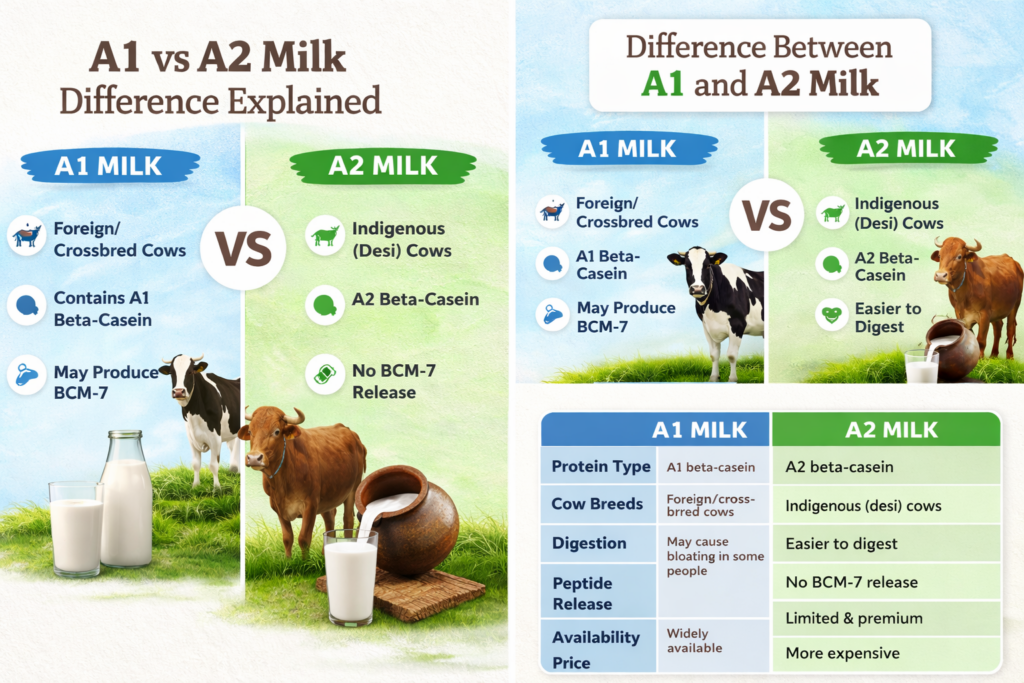
Key Difference Between A1 and A2 Milk
| Feature | A1 Milk | A2 Milk |
|---|---|---|
| Protein Type | A1 beta-casein | A2 beta-casein |
| Cow Breeds | Foreign/crossbred cows | Indigenous (desi) cows |
| Digestion | May cause bloating in some people | Easier to digest |
| Peptide Release | Produces BCM-7 | No BCM-7 release |
| Availability | Widely available | Limited & premium |
| Price | More affordable | More expensive |
Scientific Difference Explained
The difference between A1 and A2 milk is due to one amino acid in the beta-casein protein. A1 milk contains histidine, while A2 milk contains proline. This small change affects how the protein is digested and how the body responds.
- A1 milk contains histidine
- A2 milk contains proline
This small variation affects how the protein is broken down in the digestive system, leading to different effects on the body.
Health Considerations
Some people may experience bloating, gas, or stomach discomfort after consuming A1 milk. A2 milk is often preferred by those with mild digestive issues, as it is considered easier to digest, though research is still ongoing.
- Bloating
- Gas
- Stomach discomfort
A2 milk is often preferred by people who:
- Have mild symptoms of lactose sensitivity
- Experience difficulty digesting regular milk
Many consumers prefer trusted sources like Amrada A2 milk for better digestibility and natural quality. However, it is important to note that research is still ongoing, and not everyone reacts the same way to A1 milk.
Nutritional Value
A1 and A2 milk both provide essential nutrients like calcium, protein, vitamins B12 and D, and potassium. There is no major difference in nutrition; the main distinction lies in how easily the milk is digested.
- Calcium
- Protein
- Vitamins (B12, D)
- Potassium
The key difference lies in digestibility, not nutritional content.
Price and Availability
A1 milk is widely available in supermarkets and is more affordable. A2 milk is less common and usually more expensive due to traditional farming practices and lower milk yield from indigenous cow breeds.
- A1 Milk: Widely available in supermarkets and dairy brands
- A2 Milk: Less common and usually more expensive due to traditional farming methods and lower yield of desi cows, especially premium options like Amrada A2 milk.
Which One Should You Choose?
Your choice depends on your body and personal preferences:
Choose A1 Milk if:
You have no digestive issues
You are looking for a more affordable option
Choose A2 Milk if:
You experience discomfort after drinking regular milk
You prefer natural, farm-based dairy products such as Amrada A2 milk
Conclusion
A1 and A2 milk mainly differ in their protein structure, which can influence digestion. While both types offer similar nutrition, A2 milk may be a better choice for those with sensitive digestion or a preference for traditional dairy, especially when sourced from trusted providers like Amrada.
Frequently Asked Questions About A1 and A2 Milk
Understand the difference between A1 and A2 milk, their protein composition, nutritional value, digestion and availability in Dehradun.
What is the main difference between A1 and A2 milk?
Is A2 milk easier to digest than A1 milk?
Is A2 milk lactose-free?
Which cow breeds produce A2 milk in India?
Does A1 milk produce BCM-7 during digestion?
Is A2 milk more nutritious than A1 milk?
Where can I buy fresh A2 cow milk in Dehradun?
Looking for Fresh Cow Milk Home Delivery in Dehradun?
Check whether Amrada delivers to your locality, explore A2 Cow Milk and Premium Cow Milk, and review the current milk range before starting your order.